
Sennheiser Momentum True Wireless 5: Built to Outlast Its Battery
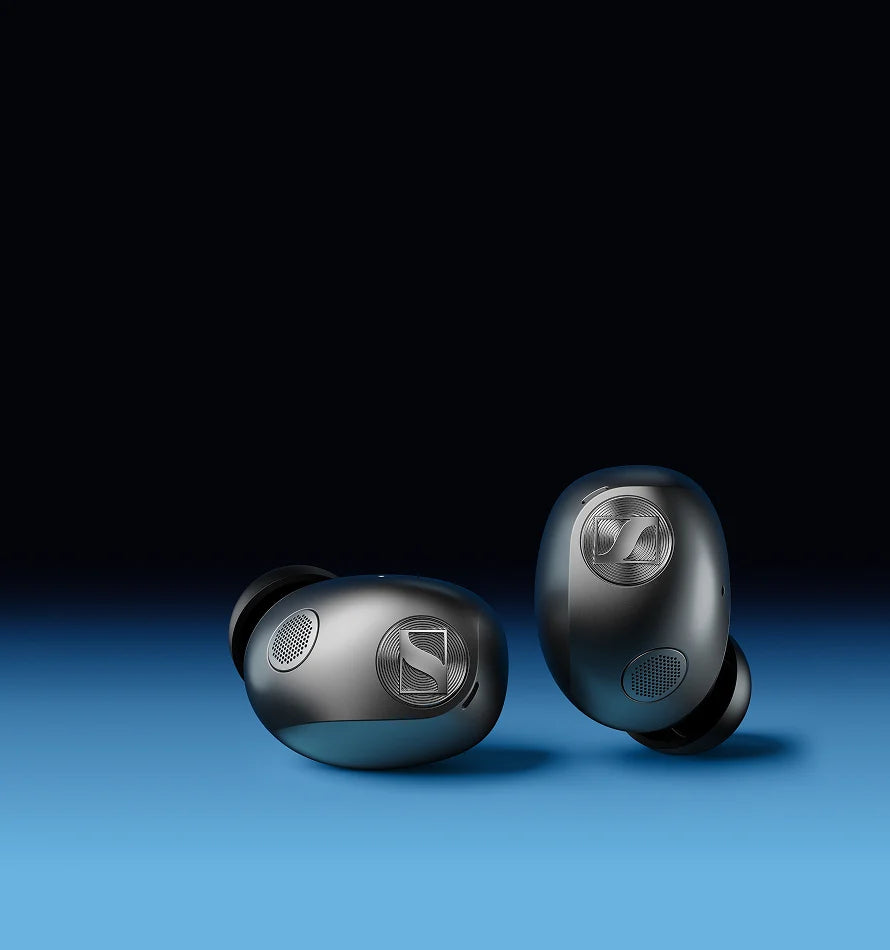
Sennheiser removed the stabilizing fins from the previous generation and rebuilt the shape using data from thousands of ear models. In its own testing, 73 percent of participants found the new shape more comfortable than its predecessor. The earbuds sit lower and less bulky, which matters less in the first ten minutes and more two hours into a workday. The charging case is narrower and smoother, easier to carry without thinking about it.
Shop Sennheiser Momentum True Wireless 5 Earphones

A commute tests adaptive noise cancellation honestly: rail noise, announcements, conversation, the rumble underneath everything. The Momentum True Wireless 5 runs a revised adaptive hybrid ANC system, built around redesigned ear tips and a four-microphone array per earbud, that responds to what's actually happening rather than applying one setting everywhere. Natural Transparency lets outside sound back in without removing the earbuds, and Sennheiser calls it its most natural real-time transparency mode yet. Wind gets separate treatment: Adaptive Anti-Wind reacts in real time, and a micro-perforated acoustic plate physically reduces turbulence before it reaches the microphones.
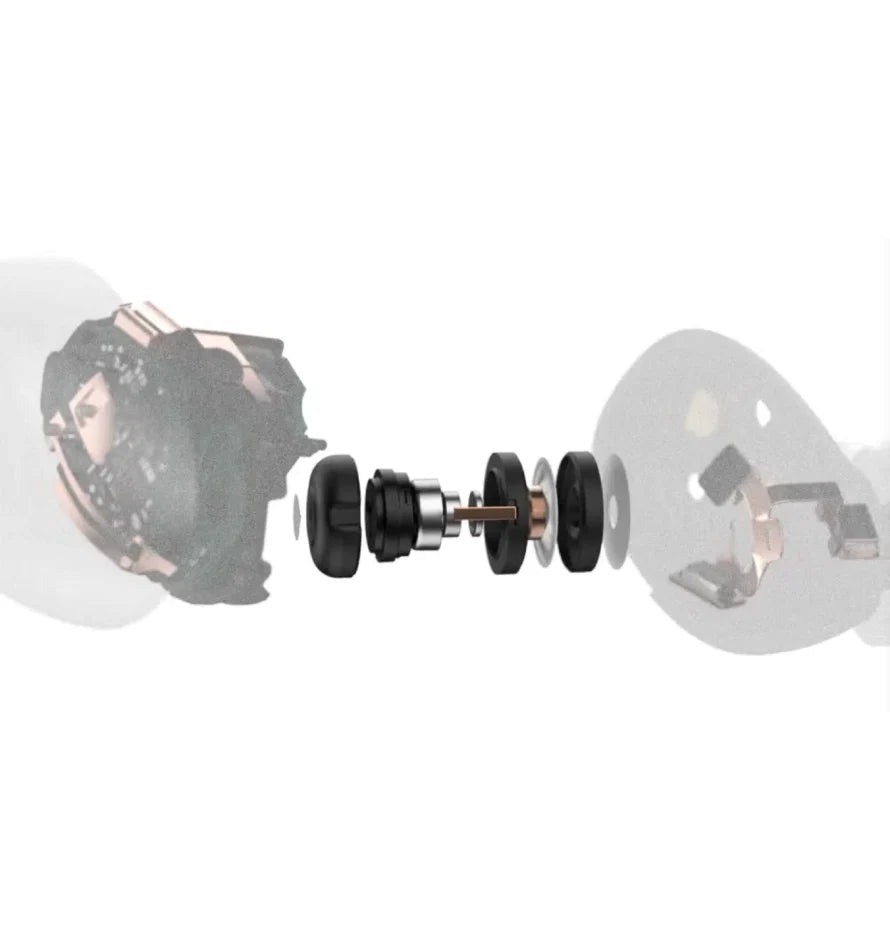
Six microphones trying to find one voice
Each earbud carries four microphones, including a voice accelerometer that picks up bone-conducted vibration. Across both earbuds, Sennheiser counts six microphones and two voice accelerometers working with AI speech extraction to isolate the wearer's voice from traffic or nearby conversation. Most earbuds handle a quiet call well. Fewer are built for the version where you don't stop walking to take it.
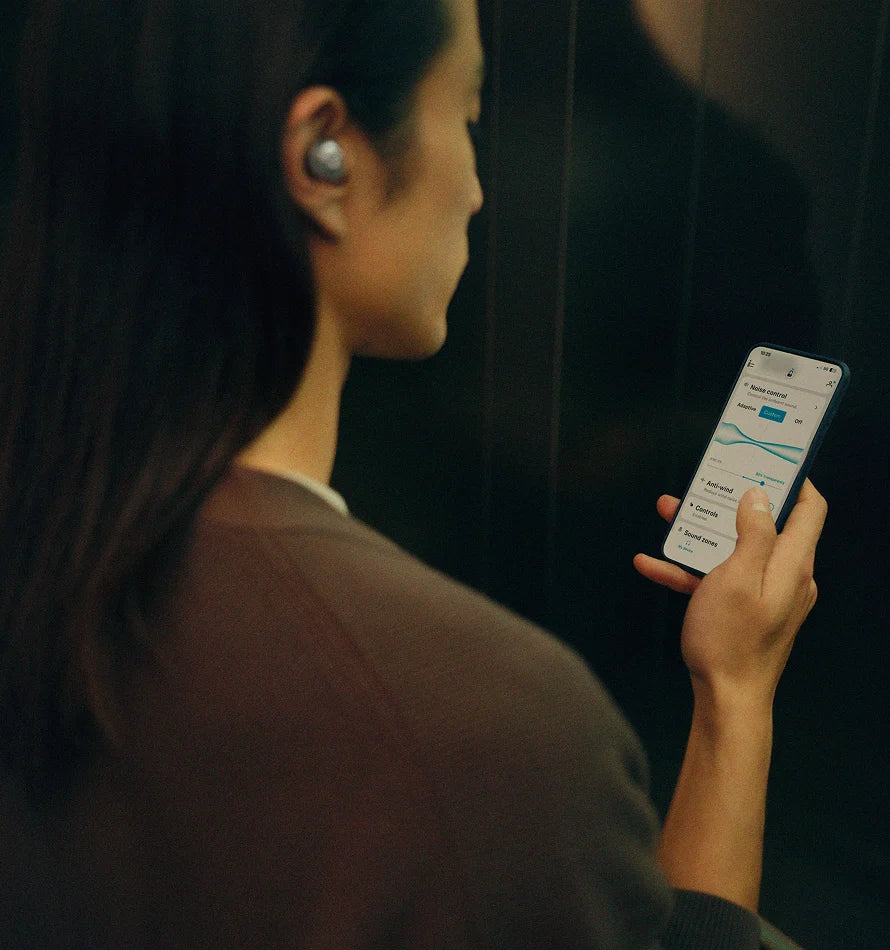
Still very Momentum
A 7mm TrueResponse dynamic driver, manufactured and tested at Sennheiser's Tullamore, Ireland facility, carries the tuning lineage that has defined the Momentum True Wireless series. Compared with the previous generation, Sennheiser describes a less forward midrange, more controlled bass, and added energy above 12kHz for more air around instruments. The Smart Control Plus app adds an eight-band EQ, and Sound Personalization, developed with the Fraunhofer Institute, builds a listening profile from interactive prompts rather than asking the listener to already know what 2kHz should sound like.
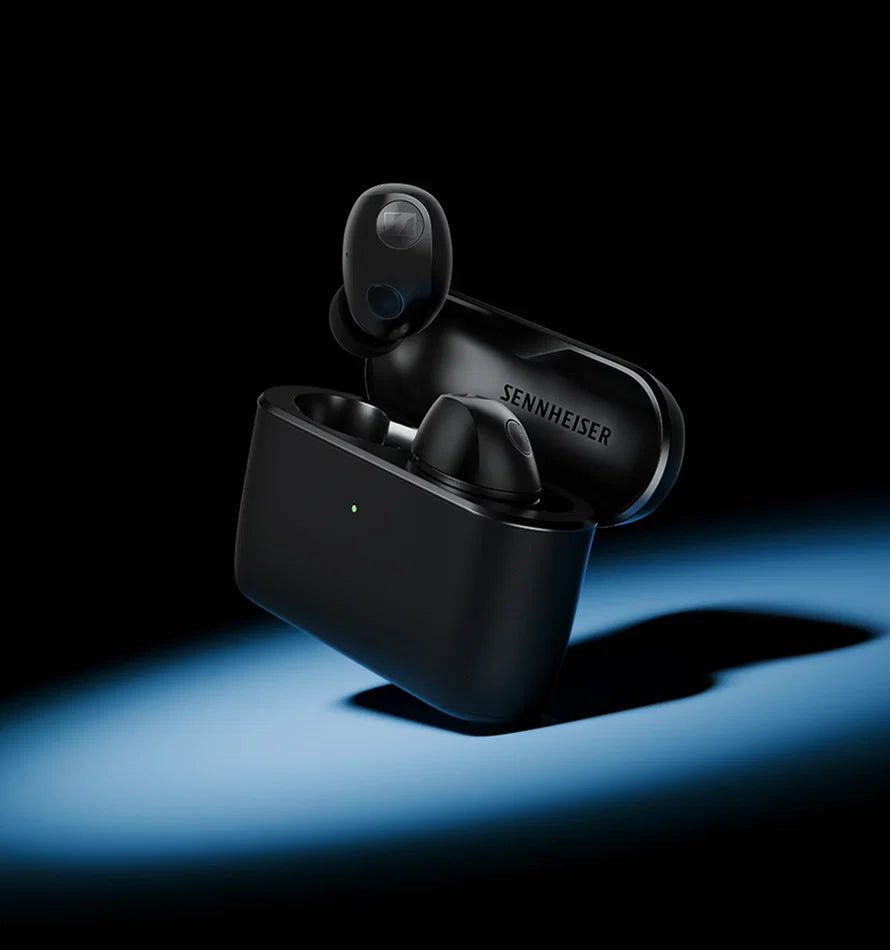
Sennheiser rates the earbuds for up to 12 hours of playback, 40 with the case, with an 8-minute quick charge adding roughly another hour. The more significant detail is what happens after the battery ages. Both earbuds and the case use user-replaceable batteries, swappable at home with a small screwdriver. Lithium batteries degrade regardless of how well everything else holds up, and an eight-hour pair quietly becoming a four-hour pair is usually where people stop using them. For a roughly $300 product, replacing the cells instead of the entire pair is not a small decision. It might be the part of this release that matters most.