The Aalto 90 Pavilion: When a Vase Becomes a Room

BrandsWalk Creative |
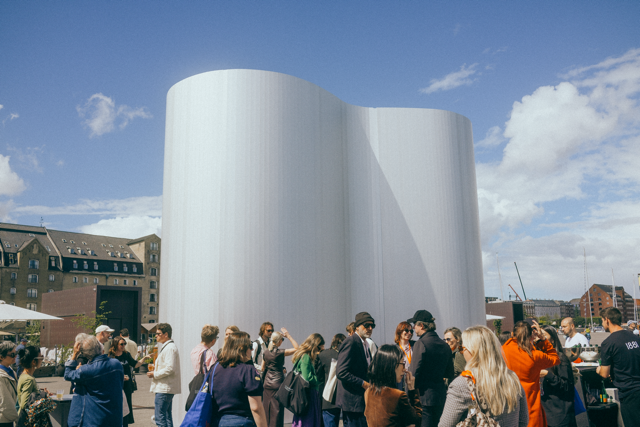
The Aalto vase was designed by Alvar Aalto and Aino Aalto in 1936 for a design competition held by the Karhula-Iittala glassworks. It went on to furnish Helsinki's Savoy restaurant in 1937, where it still sits on every table. Ninety years later, at 3 Days of Design 2026, it was scaled to seven meters tall and installed on the Copenhagen harborfront at Ofelia Plads.

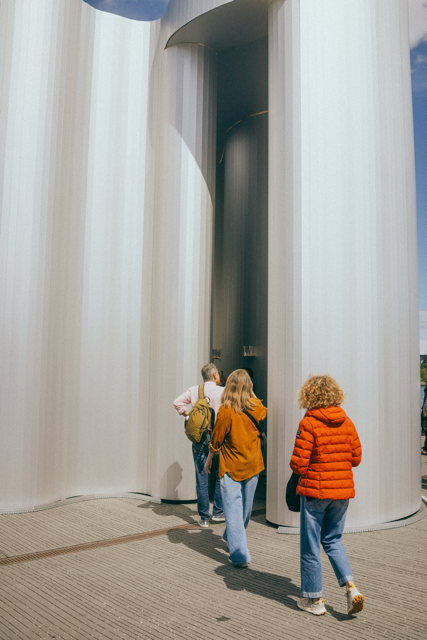
The Aalto 90 Pavilion was a collaboration between Finnish design house Iittala, Norwegian aluminium company Hydro, and Copenhagen-based studio Tableau CPH. The pavilion reproduced the exact outline of the vase as a walk-in public structure: visitors entered through a seam in the curved wall and stood inside the form. From across the water, the structure read as a single rippling curve. Up close, the aluminium panels resolved into distinct extruded profiles, fixed together without visible joints.

The Material

The pavilion was built from Hydro REDUXA, a low-carbon aluminium produced using 100% renewable energy in Sunndal, Norway. Its carbon footprint is less than one third of the global average for aluminium production, and the material is infinitely recyclable. The structure was designed for disassembly from the outset. After Copenhagen, it can be dismantled and reassembled in another city.

Inside the Pavilion

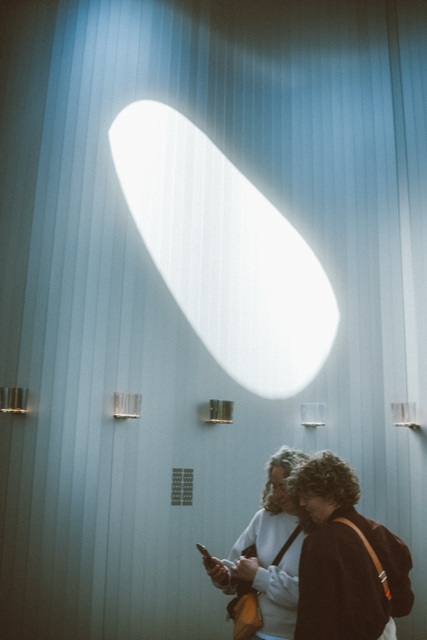
A circular skylight opening in the ceiling brought natural light into the interior, shifting through the day as the sun moved. The team treated this as a core element of the design rather than incidental to it. A soundscape, developed by Iittala's creative director Janni Vepsäläinen and composer Timo Säilä, filled the space. Säilä recorded sounds from inside Iittala's glass factory, including the sounds of glassmaking and the resonance of different Iittala objects, to build the audio component.

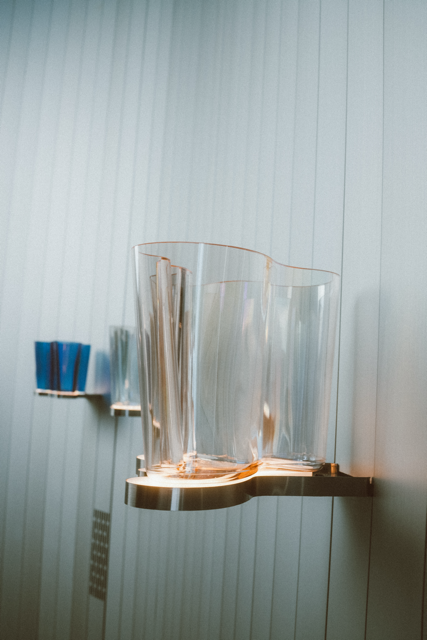
Lining the interior walls were the Aalto City Vases, a new anniversary collection of six pieces inspired by Helsinki, Tokyo, Amsterdam, Copenhagen, New York, and Berlin. Each city corresponds to a distinct colorway, produced in glass with an iridescent quality that references the curves of the original vase.

The Vase

The original Aalto vase, also known as the Savoy vase, has been in continuous production since its debut. Its asymmetric, free-form shape was a departure from the geometric conventions of the time. Iittala, founded in 1881 in the Finnish village of the same name, has produced it ever since, alongside work by designers including Kaj Franck and Oiva Toikka.

The Aalto 90 Pavilion was one of the largest public installations at 3 Days of Design 2026, and among the clearest examples of the festival functioning as a platform for something beyond product launches: a 90-year-old glass object, made large enough to walk through.