Design for the Many: What IKEA PS 2026 Is Really Asking

BrandsWalk Creative |
There is a statement that has guided IKEA since its founding, written by Ingvar Kamprad and simple enough to fit on a single line: "We have decided once and for all to side with the many." Not the discerning few. Not the design-literate. The many.

That conviction became a philosophy in 1995, when IKEA introduced the term "Democratic Design" at the Milan Furniture Fair. The words appeared on billboards and trams across the city, and the first PS collection launched alongside them: a set of products built on five principles that have governed IKEA's product development ever since. Form. Function. Quality. Sustainability. Low Price. When all five are in balance, IKEA call it the design democratic. It is a framework that sounds straightforward and is, in practice, genuinely difficult to execute.

Thirty-one years later, the tenth edition of IKEA PS has arrived. We have been following it.

PS stands for post scriptum: an addition outside the standard catalogue. The collection has always been where IKEA's most experimental work happens, the space where its in-house designers and invited collaborators are given a brief wide enough to push against. In 1995, the brief was democratic design itself. In 2026, it is something more specific: playful functionality. Simple, useful things that bring joy to everyday living, and that ask something of you in return.

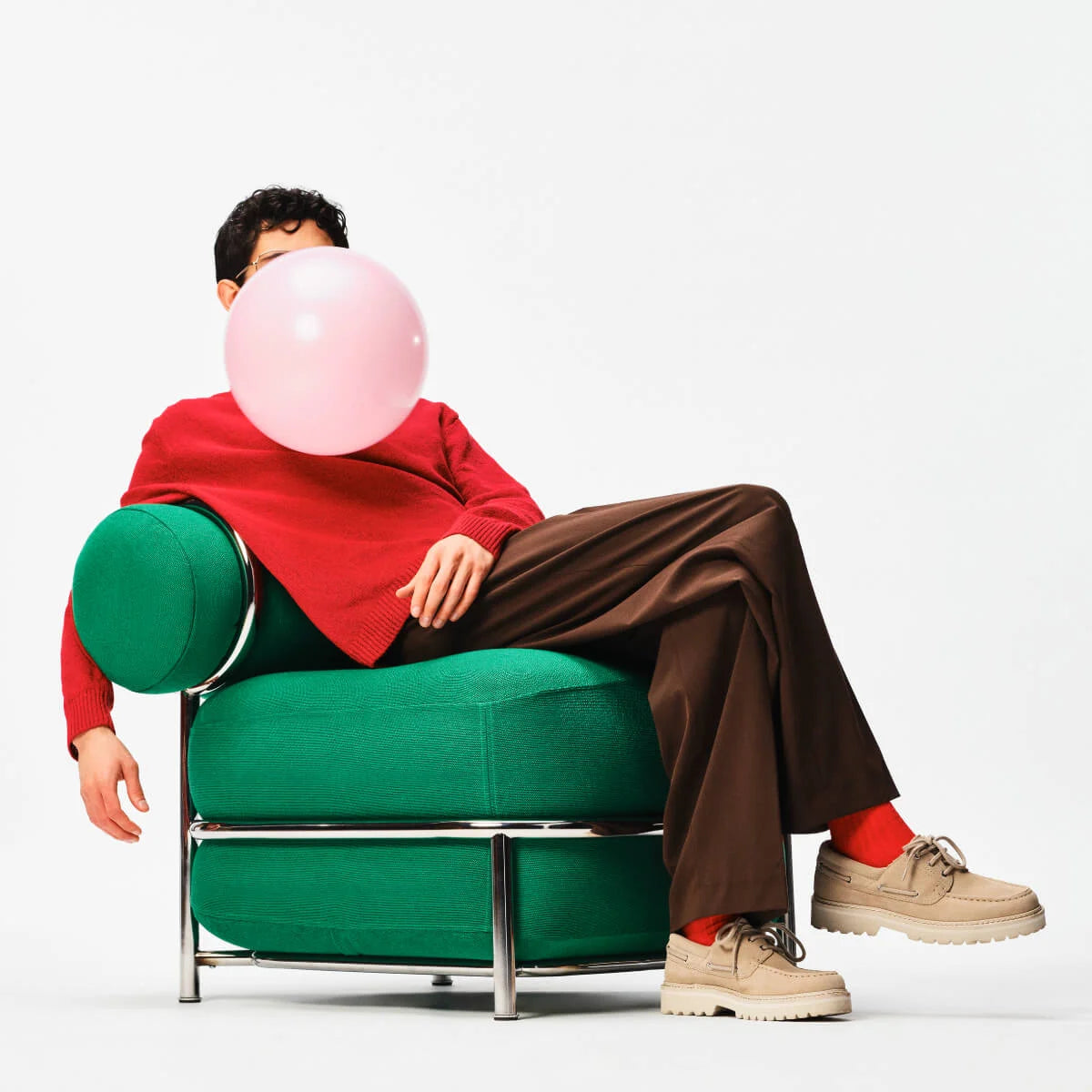
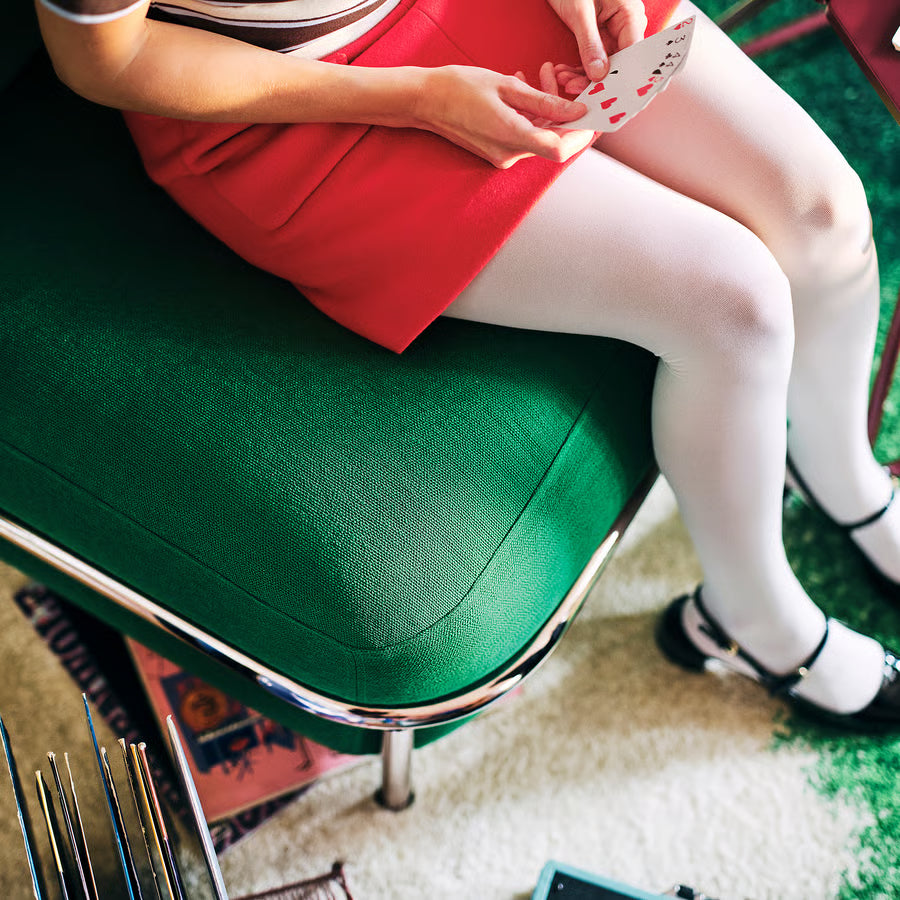
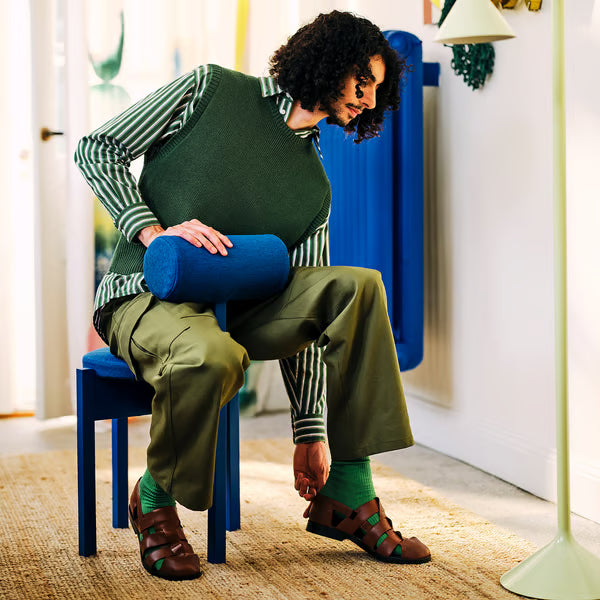
Image: IKEA PS 2026 Chair, with inflatable seathttps://www.ikea.com/us/en/p/ikea-ps-2026-chair-with-inflatable-seat-back-cushion-knaebaeck-bright-green-60633066/

The brief from creative leader Maria O'Brian to her team was precise in its paradox: "less but more, simple but not a bore." Every decision, from purpose to material to proportion, had to be questioned until the excess was gone and the character remained.

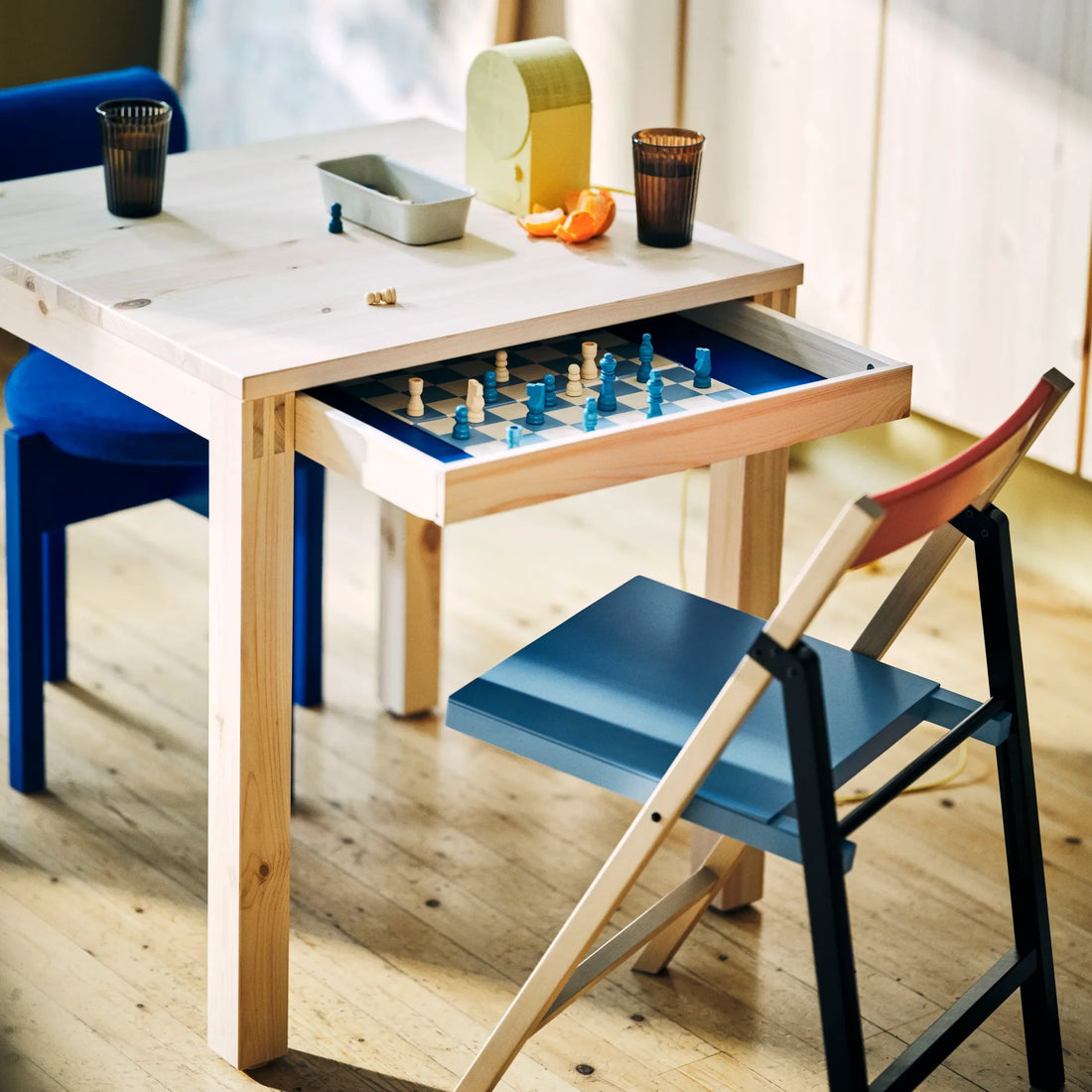
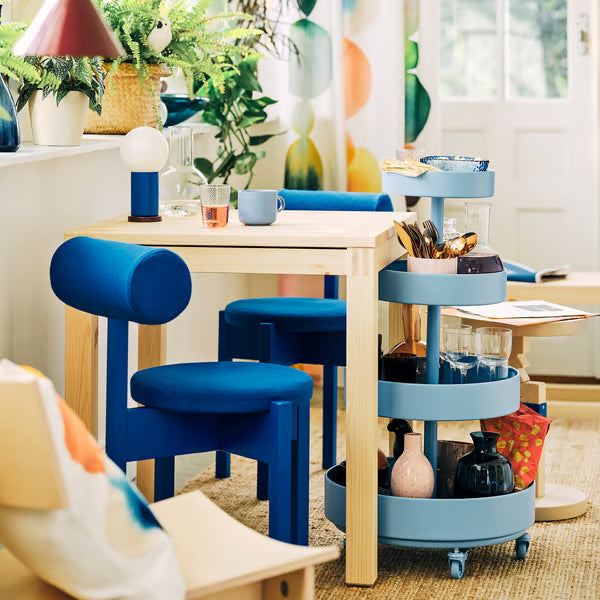
What that produces, in practice, is a collection of objects that do things. A rocking bench that sets you in motion the moment you sit down, engineered from split and reversed pine grain to hold its form under stress. A floor lamp by Rotterdam-based designer Lex Pott that rotates manually into three positions, spotlight, reading light, and uplighter, through angled cylindrical joints cut at 45 degrees. A dining table with a secret drawer that pulls from both ends, turning a shared meal into something slightly conspiratorial. A solid plywood chair designed to hang on the wall as a cubist artwork when not in use.

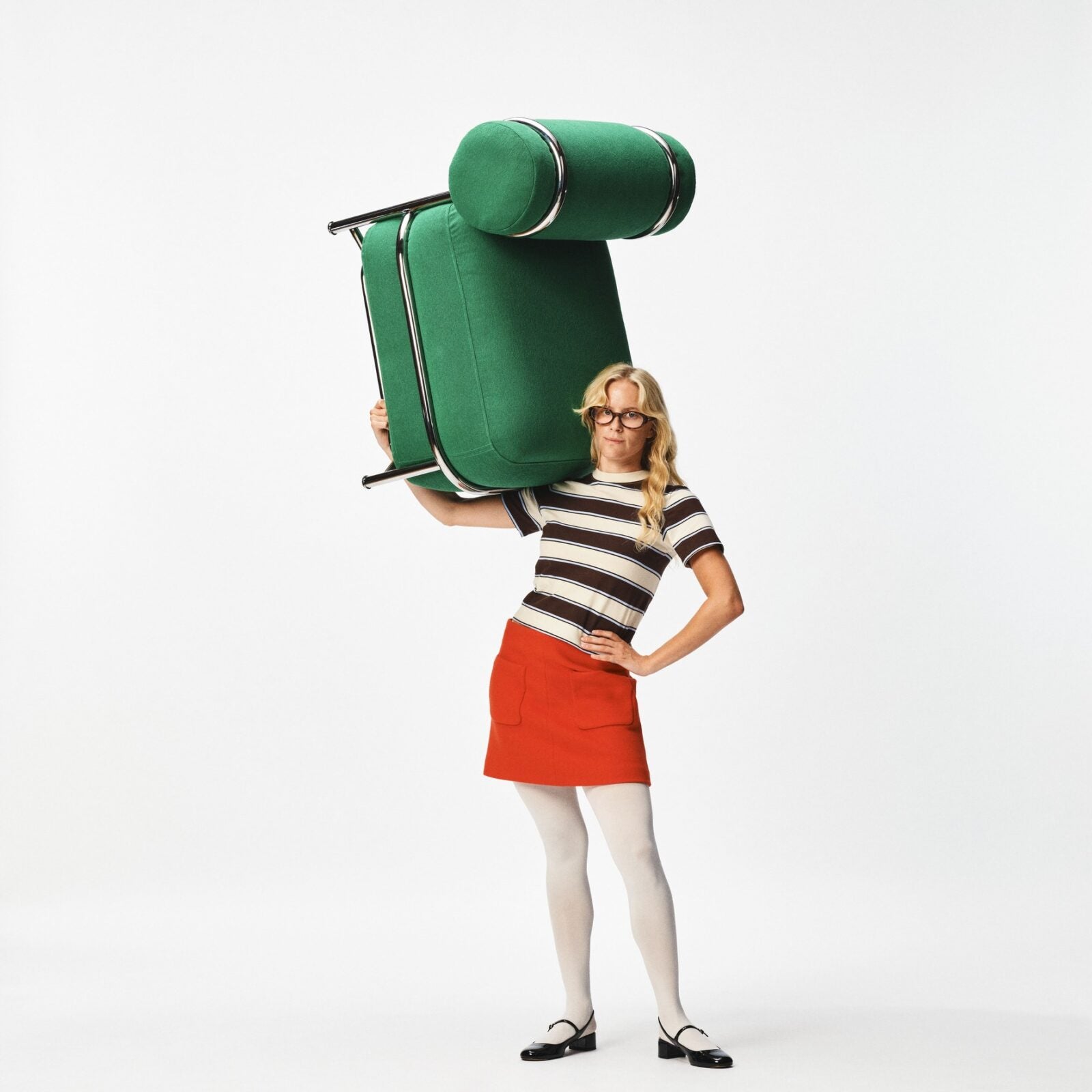
And an inflatable easy chair, designed by Mikael Axelsson, that addresses one of IKEA's longest-standing material experiments. Air is free, universally available, and reduces the amount of physical material needed to ship a product. The PS 2026 chair solves the stability problems of earlier inflatable furniture through a tubular chrome frame that holds its shape, two separate internal air chambers that distribute pressure, and a textile cover that eliminates the squeaking and sliding of earlier attempts. It arrives flat, inflates with a foot pump, and performs to the same durability standards as any conventional armchair in the IKEA range. The result is not a novelty. It is a considered answer to a material question that democratic design has been circling for decades.

What interests us about the PS collection as a whole is less the individual products than the question it keeps returning to: what is design actually for?

When you have to hold form, function, quality, sustainability, and low price in balance simultaneously, you cannot optimise for aesthetics at the expense of durability, or for price at the expense of considered material choice. The discipline is built in. And the PS collection, as the most expressive edge of that discipline, shows what happens when the constraints are loosened just enough to allow play.

In a design landscape that has spent several years optimising for visual calm, for surfaces that photograph well and offend no one, a collection that asks you to pump a chair, rock a bench, or discover a hidden drawer is doing something different. Not louder. Different. The objects have character because they make decisions. The lamp commits to three specific positions rather than infinite adjustment. The chair commits to air rather than foam. The bench commits to movement as its primary offer.

Watch BrandsWalk Youtube About IKEA Design

Kamprad's founding line was about access. What PS 2026 adds to that is the argument that access alone is not enough. The things we live with every day should also give us something to engage with. That is not a new idea in design. But it is one worth hearing again.

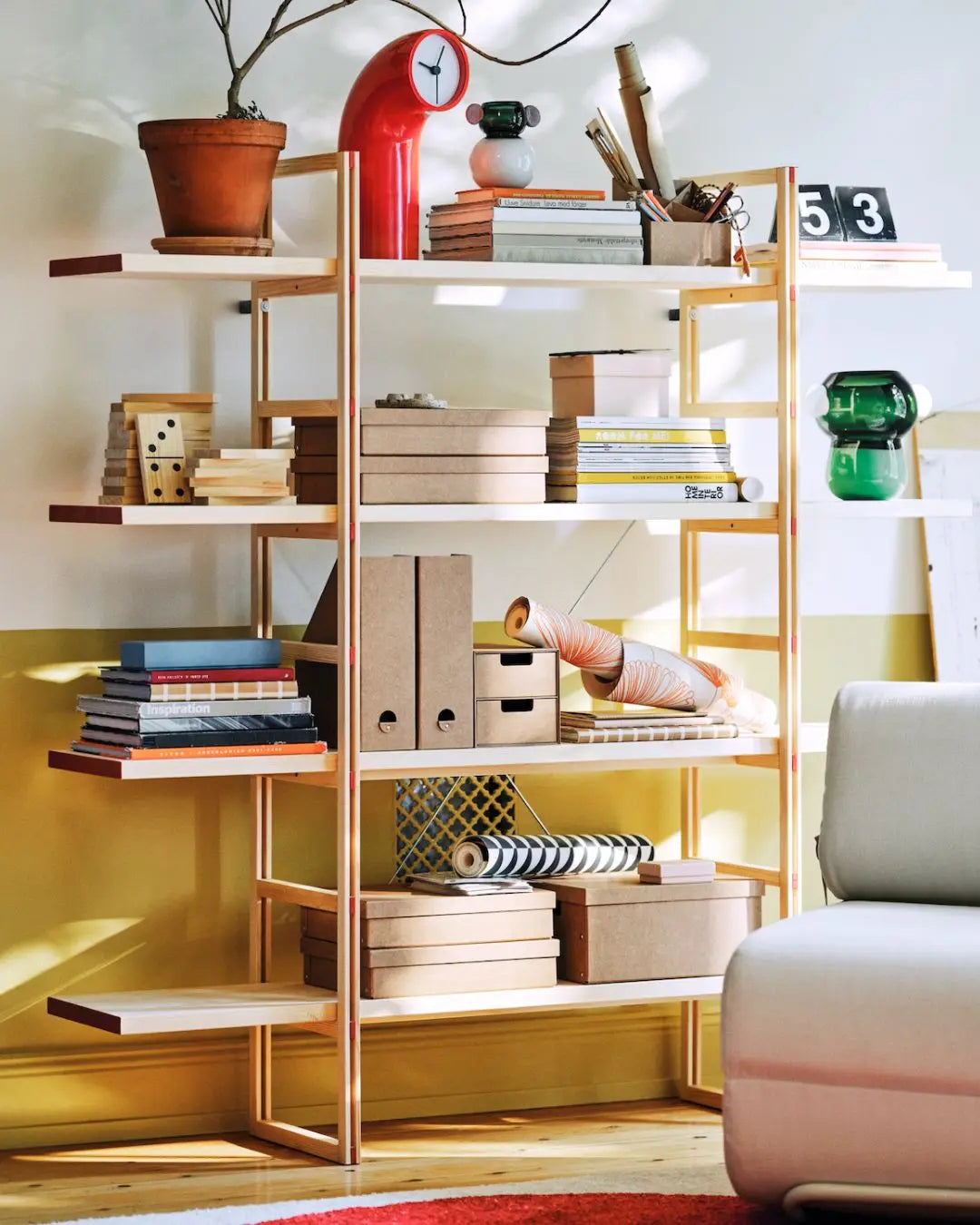
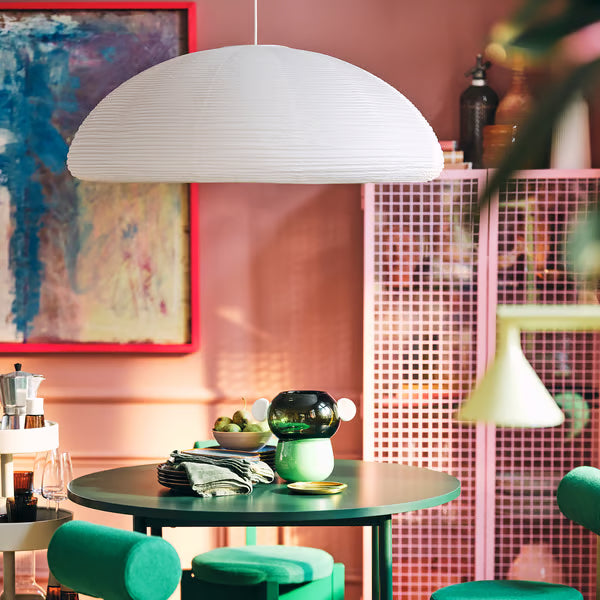
Image: Ikea PS Collection