The Filter Is the Recipe: A Brewing Guide for the ORIGAMI Dripper

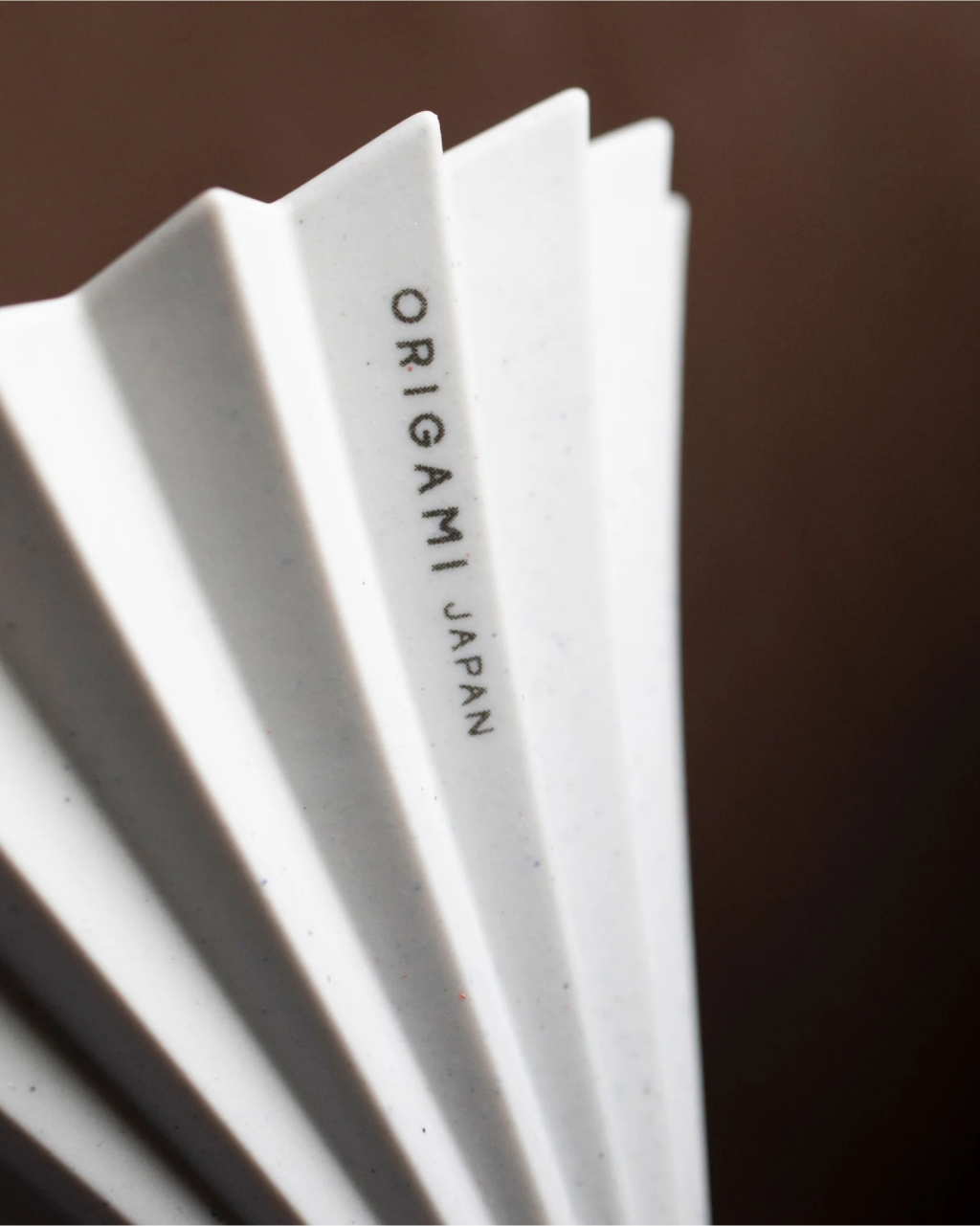
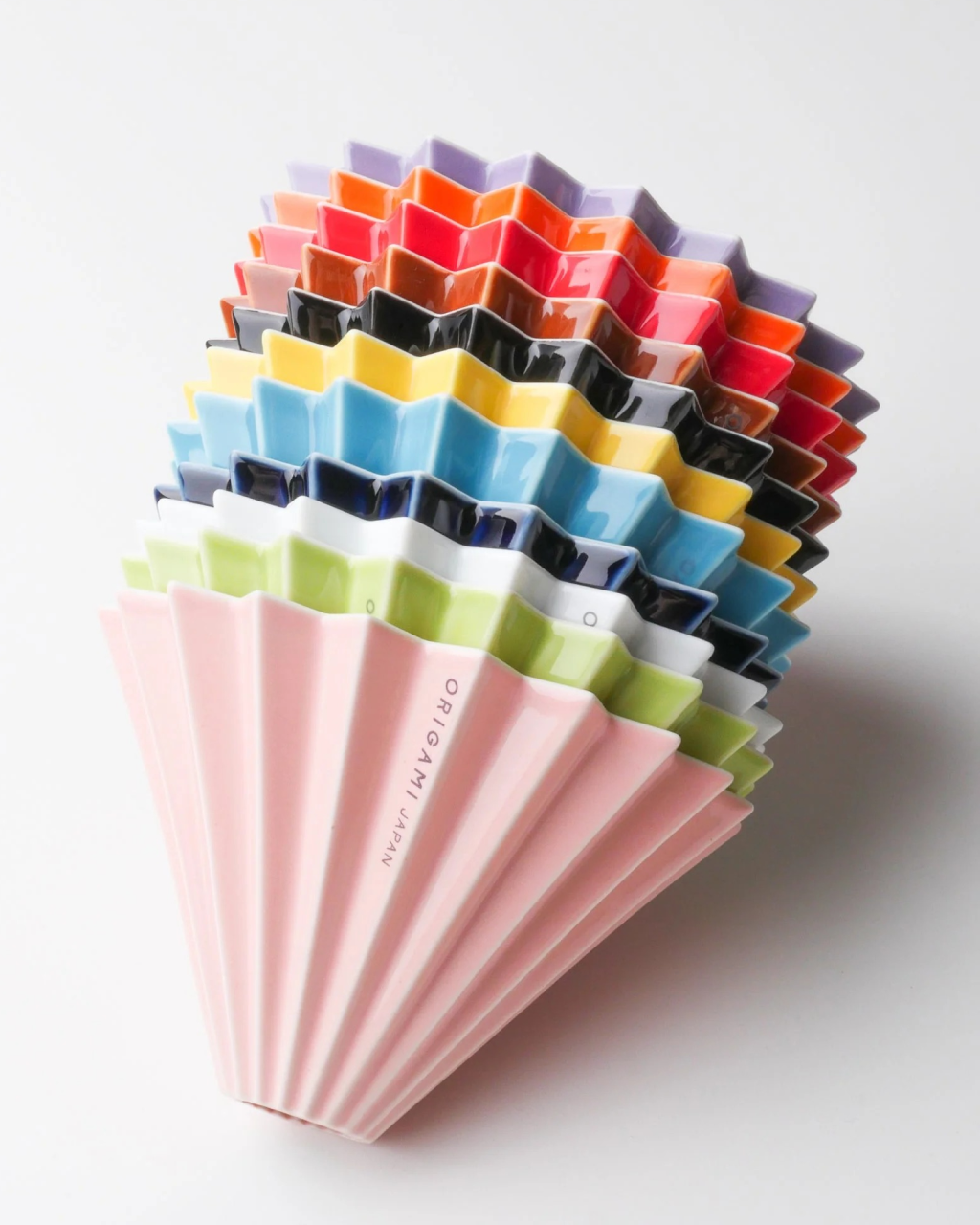
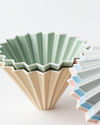
What fewer people realize is that the pleats are functional: they create space between the paper and the dripper wall, letting airflow regulate how quickly water passes through. And because the dripper accepts two distinct filter shapes (conical and wave), it does not brew the same way twice. The filter choice is not a detail. It is the recipe.

The Conical Filter: Bright, Complex, Layered
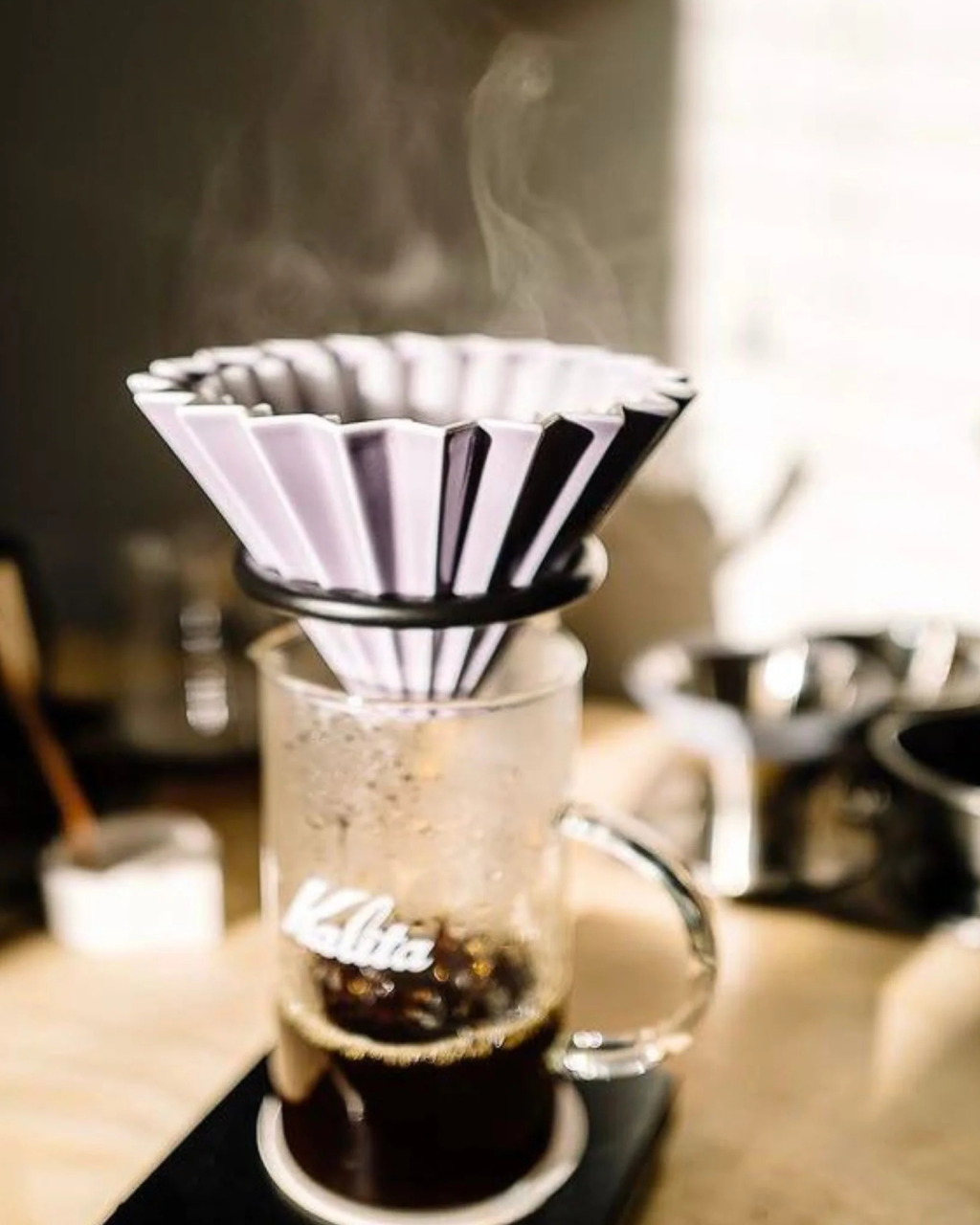
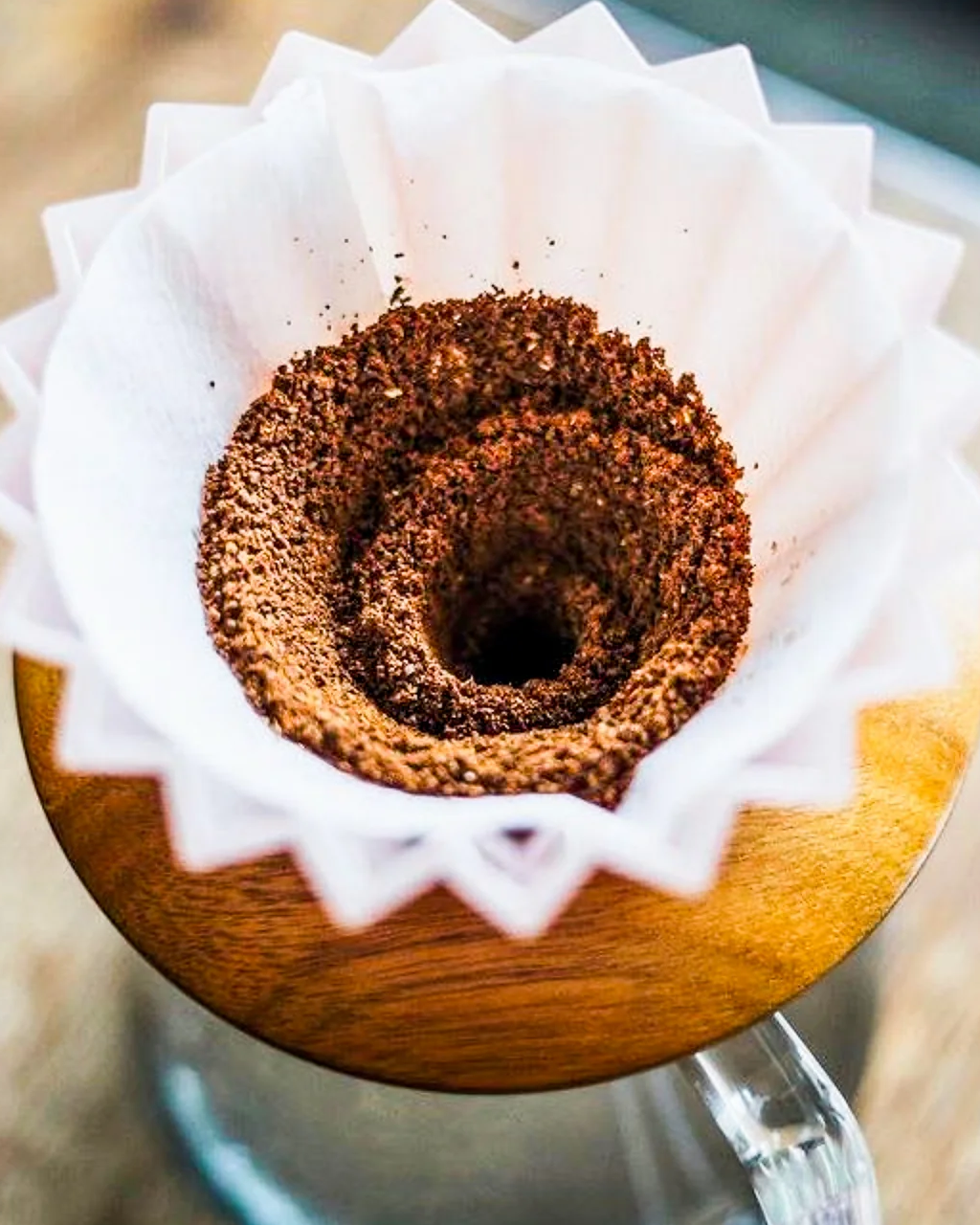
The cone filter sits deep inside the dripper with a wide gap between paper and wall. Water takes longer to pass through the thicker column of coffee grounds, and the upper and lower layers of the bed extract at different rates. The result is a cup with more separation: distinct acidity, fruit-forward notes, and a richer complexity.

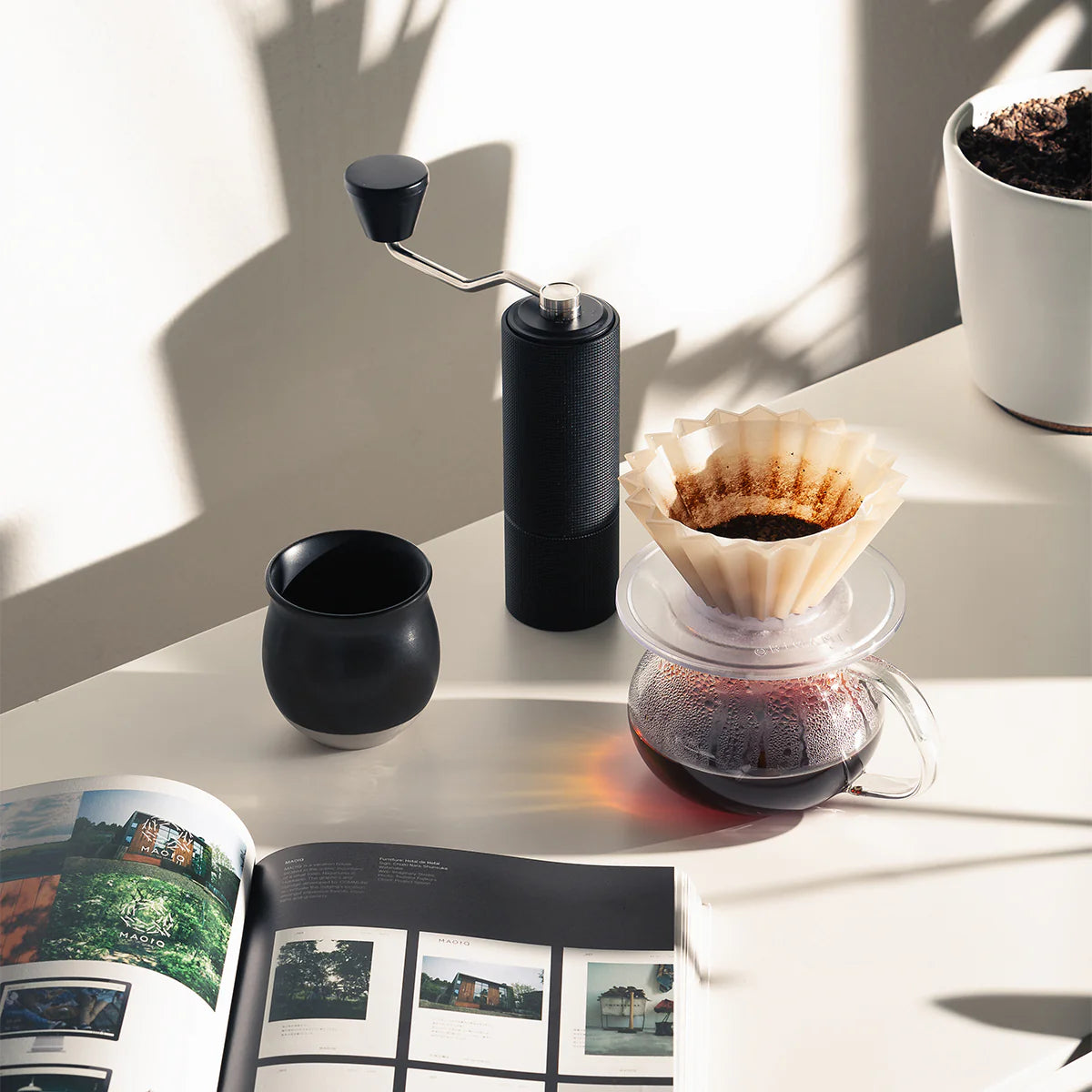
Mika Jackson, Head Barista at Fuglen Hanegi Koen, builds her recipe around this behavior. She uses 15g of medium-fine ground coffee to 250g of water at 90-93°C, pouring in two stages. The first 40g goes in at 0:00, circling slowly to saturate the grounds. At 0:40, she pours the second 40g the same way, then pours in a continuous center stream until the total reaches 250g. Total brew time: 2 to 2.5 minutes. A final stir with a spoon evens out the concentration before serving.
Read Fuglen Coffee's Coffee Recipe

For iced coffee with the same recipe, she adds 3g of cane sugar to the hot concentrate before cooling it rapidly in a bowl of ice. The sugar balances the acidity that intensifies as the coffee cools.
Image: ORIGAMI Website

The Wave Filter: Clean, Sweet, Consistent
The wave filter fits close to the dripper wall, leaving less open space. Water drains faster and more evenly, so the top and bottom of the grounds bed extract under nearly identical conditions. The result is a cleaner cup: less layering, more clarity, with sweetness and body coming through more directly.

ORIGAMI's own recipe for the wave filter uses 15g of coffee (medium-coarse grind) to 250g total at 91°C, poured in three stages: 60g first, then 90g, then a final 90g to finish, each pour separated by 30-second intervals. The first two pours circle wide across the grounds. The third pours gently into the center.
Full filter comparison guide: ORIGAMI

Two Approaches from Specialty Coffee
The barista recipes from partner cafes demonstrate how much room the dripper leaves for individual interpretation, even with identical equipment.
Daichi Hagiwara, manager of THE COFFEESHOP in Tokyo, brews with the conical filter using a six-pour method: an initial 40g bloom with an immediate five-stir agitation, followed by five more pours (50g, 60g, 60g, 50g, 40g) on a strict 10-seconds-pour, 10-seconds-rest cadence. Total: 300g water into 18g of medium-ground coffee, finishing in roughly 2 minutes and 15 seconds for about 270ml in the cup.

Masafumi Nishio of KOPIKALYAN TOKYO ROASTER uses the same conical filter and a simpler five-pour structure: 40g bloom for 30 seconds of steaming, followed by four equal 60-80g pours at 30-second intervals, 300g total into 18g of coffee. His recipe is designed around light-to-medium roast Indonesian beans, where the conical filter's longer contact time pulls out the deeper fruit character without muddying the cup.
THE COFFEESHOP recipe | KOPIKALYAN recipe

A Few Practical Notes
Before adding coffee, rinse the paper filter with hot water and discard it. This removes any residual paper taste and pre-warms the dripper. After adding grounds, give the dripper a gentle shake to level the bed. A flat surface extracts more evenly than a mound.
Bleached (white) filters are worth choosing over unbleached brown ones. The unbleached paper can carry its own flavor into the cup, especially noticeable with lighter roasts where there is less masking from the coffee itself.