A dining chair becomes part of the family’s routine. It holds breakfast conversations, late dinners, homework, and the guest who stays a little longer. Over time, it becomes so familiar that you stop noticing the decisions that made it comfortable in the first place.
FDB Møbler’s story begins with those decisions. How much space should a chair take up? How should a backrest support the body? Can good furniture be made available to the people who need it? The Danish brand built a lasting identity by taking ordinary life seriously, and by finding beauty in objects that earn their place through use.
A Design Movement for Ordinary Homes
In 1942, Denmark’s consumer cooperative organization FDB established a furniture design studio under its architectural office. Børge Mogensen, then 28, became its first leader. The brief was ambitious: develop modern, practical furniture with sound materials and construction at prices that ordinary households could afford. Denmark’s workers and rural families were part of the audience from the beginning.
That cooperative background gives the furniture a different starting point. A dining table was a place to eat, work, and gather. A chair needed to fit a room and support the person sitting in it. Good design could contribute to the way a household functioned, down to the objects people used every morning.


FDB also experimented with how to show that idea. In 1944, a Copenhagen furniture shop included two furnished demonstration apartments, representing homes in the city and the countryside. Customers could see combinations of furniture in a domestic setting, and the apartments provided a place to try prototypes before production.
There is something appealingly contemporary about that approach. Today we still want to know whether a table will dominate a small room, whether a chair feels welcoming, and whether different pieces will work together. FDB was asking those questions while helping shape the furniture we now associate with Danish modern design.

Børge Mogensen
The Character Inside a Simple Chair
FDB’s design history includes Mogensen, Poul M. Volther, Ejvind A. Johansson, and Jørgen Bækmark. Each brought a different sensibility to the collection, extending a shared interest in useful furniture rather than imposing a single designer’s style on every object. Bækmark led the studio from 1958 to 1967, creating some of its best-known chairs.
Volther’s J46, introduced in 1956, is an especially clear expression of the brand. Its open spoke back creates a light outline; the curved upper frame gives that outline personality. Around a dining table, the chairs allow you to see through the room, while their rounded forms keep the setting from feeling severe.

The J46 shows how recognition can come from proportion. You do not need a complicated silhouette to remember a chair. The relationship between the back, seat, and legs is enough. Its familiarity is part of its strength: you can imagine it in a kitchen before you know the designer’s name.
Bækmark’s J80 offers another lesson. Its wooden frame and woven seat give it an entirely different surface and presence. The back creates a pattern of open space, while the seat introduces texture. The contrast between those parts is easy to appreciate in a photograph and becomes more immediate when you sit down.

These are useful pieces to consider together. One chair may bring a sharper graphic outline; another adds the warmth of weaving. Both show how much thought can sit inside an object that initially seems straightforward.
Putting two of these chairs beside each other makes the archive easier to read. Look at where the back meets the frame, how the seat is supported, and which parts remain visible from behind. These small differences explain why familiar dining chairs can have such distinct characters. The history becomes a series of choices you can see, rather than a list of names and dates.


J46 chairs around a dining table
An Archive That Found Its Way Back
The original FDB furniture business operated from 1942 to 1980. Its designs continued to have a life in homes and in the history of Danish design after that first chapter ended. In 2013, the brand was revived, bringing important furniture classics back into production. The history is documented in the book En lys og lykkelig fremtid, devoted to FDB’s furniture project.

A revival gives a design a new test. The dimensions and habits of contemporary homes may have changed, but a chair still needs to be comfortable, manageable, and easy to place. Bringing an archival object back asks whether its original decisions continue to make sense when people use it now.
That is where FDB’s approach becomes persuasive. Its best-known pieces were shaped around recurring needs: sitting at a table, creating storage, making space for family life. Those needs give the archive a practical connection to the present.


The current collection also includes work by newer designers, alongside the historic names. Designers such as Laura Bilde, Rikke Frost, and Thomas E. Alken contribute to a broader collection of furniture and home objects. The brand’s story can therefore develop through new work as well as the return of familiar designs.

For someone discovering FDB today, that creates more than one way into the collection. You may arrive through a famous chair, then find a newer piece that answers a different need. The archive establishes the character of the brand; the continuing design work gives that character somewhere to go.

Jørgen Bækmark
Furniture That Becomes Part of Your Own Story
Wood is central to many FDB pieces, and the construction invites a closer look: the meeting of a leg and a frame, the pattern of a woven seat, the way a backrest curves toward the body. These details give the furniture substance beyond its first impression.

FDB describes longevity as a guiding aim and says its furniture undergoes testing at the Danish Technological Institute before release. It also identifies FSC-certified wooden products in its collection. Those are concrete parts of the brand’s current approach to materials and durability.
For a home, the value of that thinking is easy to understand. Furniture experiences daily movement. Chairs are pulled across floors, tables are shared by several activities, and rooms change as families grow. An object intended for continuing use needs to make sense in all those ordinary situations.
The design also leaves room for personal surroundings. An FDB chair can sit beside books, ceramics, a bright textile, or a table with its own history. Its clear form provides a point of connection between those objects. You can build a room gradually, allowing different pieces to find a relationship with one another.


At BrandsWalk, that is what makes FDB Møbler compelling. Its history has a social purpose, its classics have recognizable character, and its furniture offers an immediate place in everyday life. The designers’ decisions are there to discover, but the experience begins simply: pull up a chair.
Then come the meals, the conversations, and the years of use. A piece with its own design history starts to collect the history of the people who own it. That is when furniture becomes something you would like to keep.

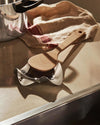
FDB craftsmanship